It’s easy to think that a high delivery rate means your email campaigns are hitting their mark. Since your emails aren’t bouncing, they must be getting to your subscribers, right? Not quite. In fact, this is a common deliverability myth, leading many marketers to celebrate a metric that only tells half the story.
Simply reaching a mailbox provider isn’t enough. The real win is landing your email in the inbox, where your audience can actually see and engage with your message. That’s why measuring inbox placement is essential for understanding the reach and impact of your email marketing efforts.
What’s the difference between delivery rate and inbox placement rate?
Delivery rate refers to whether your email is accepted by the recipient’s mailbox provider. If an email doesn’t get delivered, it means it bounced—either a hard bounce, which means the address doesn’t exist, or a soft bounce, which is a temporary issue, like a full inbox. A high delivery rate is one positive indicator of a healthy email list.
Inbox placement, on the other hand, measures whether your email, once it reaches the mailbox provider, actually lands where the recipient will see it. This placement is heavily influenced by your sender reputation, email content, recipient engagement, and other factors. Mailbox providers use a mix of these factors to decide if you’re trustworthy or not.
The key difference is that delivery rate tells you whether your email reached the mailbox server, while inbox placement tells you if it made it past the spam filters and into the inbox—where subscribers are most likely to open it. This important distinction directly impacts your marketing success. When emails are actually seen, you increase engagement rates and conversions, making measuring inbox placement essential.
Why you need to measure inbox placement
Making sure your carefully crafted emails land directly in the inbox is how you truly maximize their impact, driving higher visibility, engagement, and conversions. Every improvement in inbox placement directly strengthens your audience reach and boosts lead generation. Plus, tracking this metric provides an early signal of your sender reputation, so your team can get ahead of any issues and ensure a trusted, high-performing email program.
Visibility is revenue. Emails that consistently land in the primary inbox are much more likely to be opened, clicked, and acted upon. This directly translates into sales, sign-ups, or whatever your campaign’s ultimate goal might be. Without inbox placement, even the most compelling offer or update becomes invisible, which can render your marketing efforts and budget ineffective. That’s why it’s so crucial to understand where your emails land. It empowers you to switch up your strategy to get the most revenue.
Why email service providers (ESPs) care about engagement
ESPs like Gmail and Outlook rank and filter emails based on user behavior. This means messages that are opened, read, and interacted with are much more likely to appear in the inbox for future sends. In contrast, emails that are never opened, marked as spam, or deleted without reading show ESPs that they aren’t relevant. This affects your sender reputation over time.
Strong engagement tells providers that your subscribers value your messages. It makes you look trustworthy, improving your future inbox rates. It’s a continuous feedback loop, where positive user interaction ensures a healthy sender score.
How to measure your inbox placement
Your ESP’s “Delivered” metric is a blind spot. To see what your customers actually see, you’ll need a testing strategy. Here are a few steps to measure true visibility:
Step 1: Deploy a seed list test
A seed list test is the standard way to measure deliverability. It involves sending an inbox tracking email to a seed list—a collection of test email addresses across all the major mailbox providers, like Gmail and Yahoo. You should send your actual campaign content to this list just as you would to your real subscribers.
Step 2: Analyze folder placement
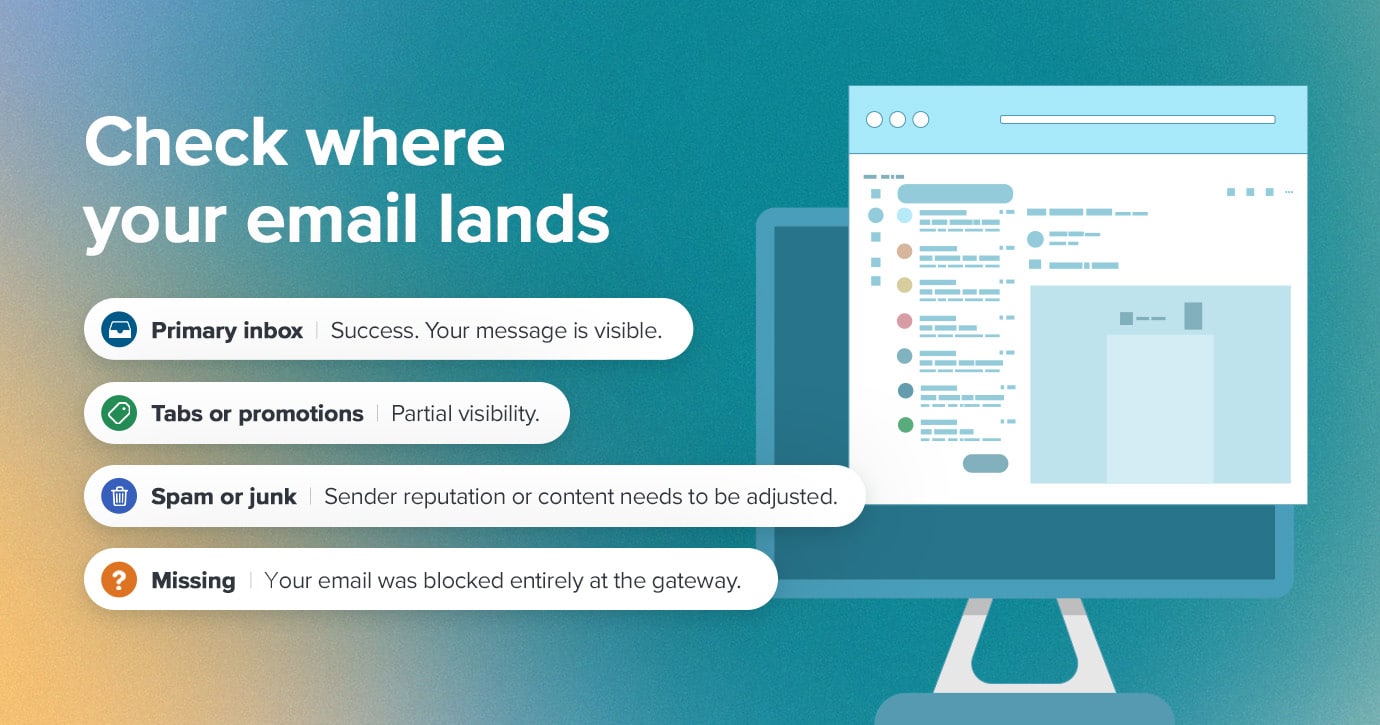
Using diagnostic tools, check to see where your email ends up in each of the test mailboxes. Did it hit the primary inbox, land in promotions, or get filtered to spam? Because you own these test inboxes, you get an unbiased view of exactly where the email lands:
- Primary inbox: Success. Your message is visible.
- Tabs or promotions: Partial visibility, common in Gmail.
- Spam or junk: A signal that your sender reputation or content needs to be adjusted.
- Missing: Your email was blocked entirely at the gateway.
Step 3: Calculate your inbox placement rate (IPR)
This inbox placement test provides a precise view of your actual reach, allowing you to calculate your IPR—the percentage of emails that successfully reach the inbox. This metric—not delivery rate—should be your true north for campaign performance.
- Formula: (Emails in Inbox / Total Emails Delivered) x 100 = IPR
Strategies to improve your inbox placement
Use these strategies to improve your inbox placement, build lasting subscriber trust, and drive revenue:
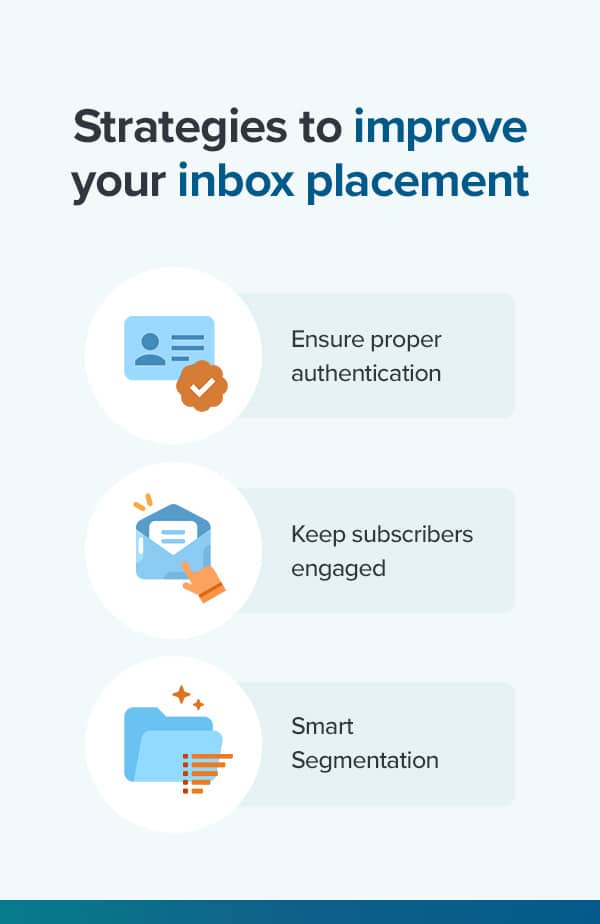
1. Ensure proper authentication
Authentication is like a digital ID card—without it, you’re an anonymous stranger knocking on the door. Authenticating your emails is the first step in building trust with mailbox providers. It ensures your messages aren’t immediately flagged as suspicious. It’s about proving you are who you say you are. Make sure that the following are set up correctly to prove your emails are coming from a trusted source:
- Sender policy framework (SPF): Your SPF is the Domain Name System (DNS) record that lists which IP addresses are allowed to send email on your behalf. If an email arrives from an IP address not on your SPF record, the receiving server will view it as a spoofed email, rejecting it or flagging it as spam.
- DomainKeys Identified Mail (DKIM): This is the encrypted signature that proves the email content wasn’t tampered with during transit. This cryptographic signature protects the message as it goes from sender to recipient. It prevents unauthorized alterations, further building trust with mailbox providers.
- Domain-based message authentication, reporting, and conformance (DMARC): This is the policy that tells the receiving server what to do if SPF or DKIM fail, either rejecting or quarantining it, for instance. DMARC dictates that these unauthenticated emails should be handled, while also reporting them so it’s easily visible to you to fix the issue.
As of 2024, Google and Yahoo now require these three authentication steps for bulk senders. Not having them will cause your emails to go to spam. Having them ensures your emails are delivered, avoiding disruptions and ensuring a successful email marketing campaign.
Master the email deliverability lingo
Enhance your understanding and improve your email marketing outcomes.

2. Keep subscribers engaged
Your subscriber engagement has a big impact on your sender reputation. Subscribers who haven’t opened your emails in over a year, for instance, signal to mailbox providers that your content isn’t relevant. Providers turn these old, abandoned email addresses into spam traps. If you hit one, it tells the provider that you aren’t managing your email list. This can harm your reputation and push your emails to spam, even for active subscribers.
To avoid this, run re-engagement campaigns when needed. You might send out messages like, “Do you still want to hear from us?” for instance, as a last-ditch effort to re-ignite interest from dormant subscribers. If they don’t click, simply delete them from your email list. Regularly removing them will keep your list healthy and responsive, demonstrating high engagement to mailbox providers.
You might also use a verification tool at the point of signup to protect your sender reputation from the start. These tools can prevent typos, like invalid or misspelled email addresses, from entering your database. They can save you from future bounce issues and make sure your emails only get to those who will engage with them.
3. Smart Segmentation
A personalized, relevant approach is crucial in today’s email landscape. For users to truly engage with your content, your messages should reflect their actual interests and past behavior. Segment your audience to send specific content only to the people who are most likely to click it. You’ll dramatically increase the chances that users open, click, and positively interact with your messages—all crucial signals to mailbox providers that your emails are valued by recipients.
For example, instead of sending a product update message to 50,000 people, send it to the 10,000 active users who actually use that feature. A targeted approach keeps your content relevant to recipients, increasing your engagement metrics. The better open rate can signal to mailbox providers that your content is popular, boosting your reputation for future sends.
High engagement means high placement. Providers notice engagement, and they reward senders who consistently deliver content their audience actively wants to receive. This will improve your inbox placement across the board.
Advanced strategies for scaling placement
If you have high sending volumes or a global footprint, pristine inbox placement will take more advanced strategies. For true enterprise-level deliverability, you need to be able to solidify your sender reputation while also being able to adjust to ever-changing mailbox provider filtering. These strategies can help you reach the inbox consistently while also elevating your brand’s visibility and helping you grow:
1. Sender certification
Certification is a whitelist program where vetted senders essentially get special treatment. It uses a strict testing process to confirm that you follow best practices. With certification, you stand out as reputable in the eyes of participating mailbox providers. There are numerous benefits to getting sender certification:
- Bypass filters: Certified IPs usually skip the strict volume limits and content filters that standard IPs face. It means your emails are much more likely to land directly in the inbox, even during peak sending times or with content that might otherwise signal less reputable senders.
- Image unblocking: As a certified sender, your images are automatically displayed. This can improve engagement. When images load by default, your emails become more visually appealing and impactful. They can lead to higher interaction rates and make your brand appear more professional.
Certified senders get 27 million more emails to the inbox annually compared to non-certified peers. This shows the advantage that sender certification can provide in boosting your email reach and effectiveness.
Safeguard your email reputation
Validity Engage has the industry’s most exclusive email allow-list—helping senders reach more inboxes and bypass key spam filters around the world.
2. Brand indicators for message identification (BIMI)
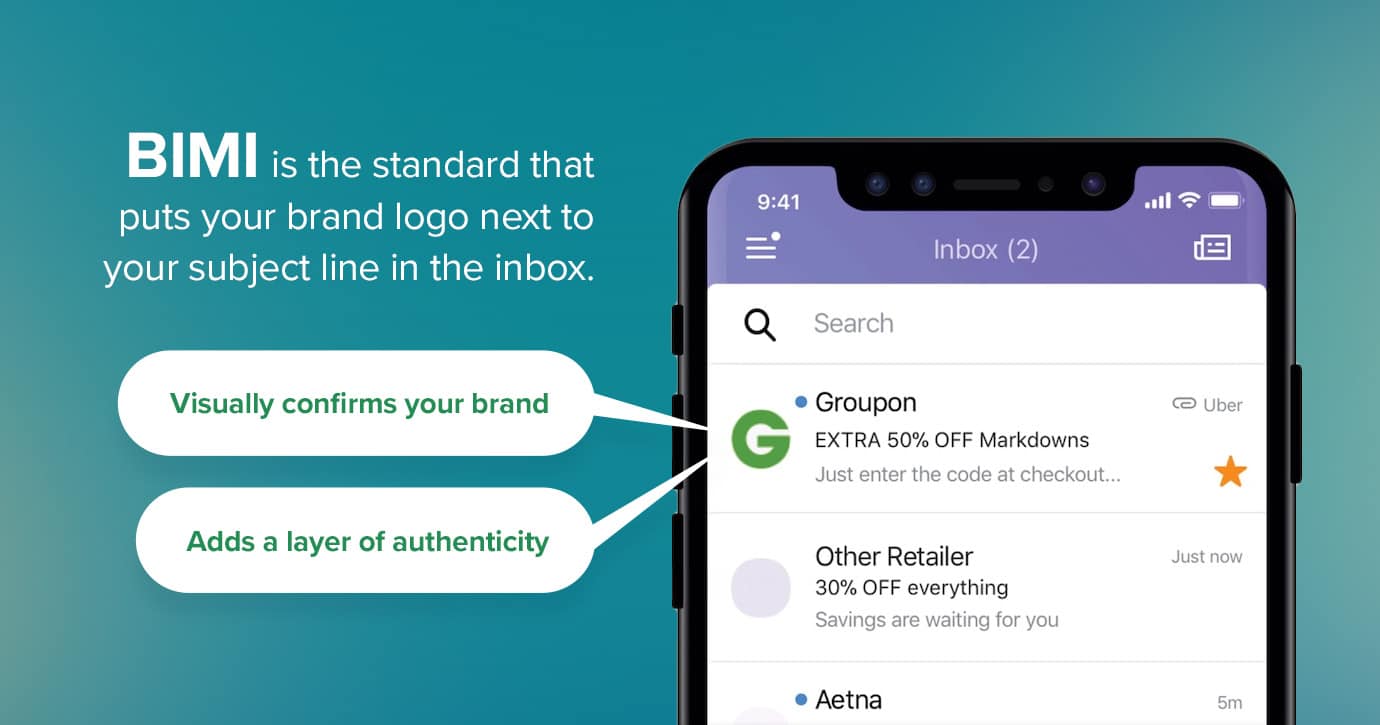
BIMI is the standard that puts your brand logo next to your subject line in the inbox. It visually confirms your brand to recipients before they even open the email, adding another layer of authenticity that’s crucial in an era of increasing email fraud. BIMI can help your subscribers quickly see that you are legitimate, and that emails are real—not phishing. It can instill confidence in your brand and make it more likely that your emails are opened, not ignored or marked as spam.
BIMI can also help you stand out in a crowded inbox. With a distinctive brand logo showing, your email can be more easily visible in a sea of text-only subject lines. It can draw users’ attention and encourage them to open your message over others.
Note that to use BIMI, you’ll need to have DMARC at “quarantine” or “reject” enforcement. This is so that only brands with strong email authentication policies in place can use BIMI, showcasing just how strong a trust signal it really is.
3. Real-time feedback loops (FBLs)
To further ensure your email placement, sign up for FBLs. They’re offered by Google Postmaster Tools and Microsoft SNDs. These crucial tools offer insights into how your subscribers perceive your emails, specifically when they actively mark your messages as spam.
When a user marks you as spam, the mailbox provider will automatically tell you who did it, letting you pinpoint the specific email addresses generating complaints. This can help you improve your list hygiene and content strategy. For instance, you can ensure that you don’t email that user again. High complaint rates are a red flag for mailbox providers. Keeping these users out of your email list ensures a healthy sender reputation and deliverability for the rest of your recipients.
Make sure your emails reach the inbox
It’s time to shift the focus from delivery rates to the email deliverability metric that truly counts—inbox placement. Knowing exactly where your emails land is the biggest difference between sending messages to the void and connecting directly with your audience. With Litmus Deliverability, you get insights into your email marketing to pinpoint exactly what’s affecting your sender reputation. You can refine your email strategy and boost your campaign impact with data-driven confidence.
Whether you’re a growing team or an established enterprise, we have tailored solutions for you. Our tools can transform your email program and deliver the visibility and results your business demands. Get started today to take control of your email program’s true reach and drive meaningful engagement.
Land in inboxes, not spam folders
See deliverability problems before they cost you with real-time placement testing, reputation monitoring, and authentication checks in your workflow.